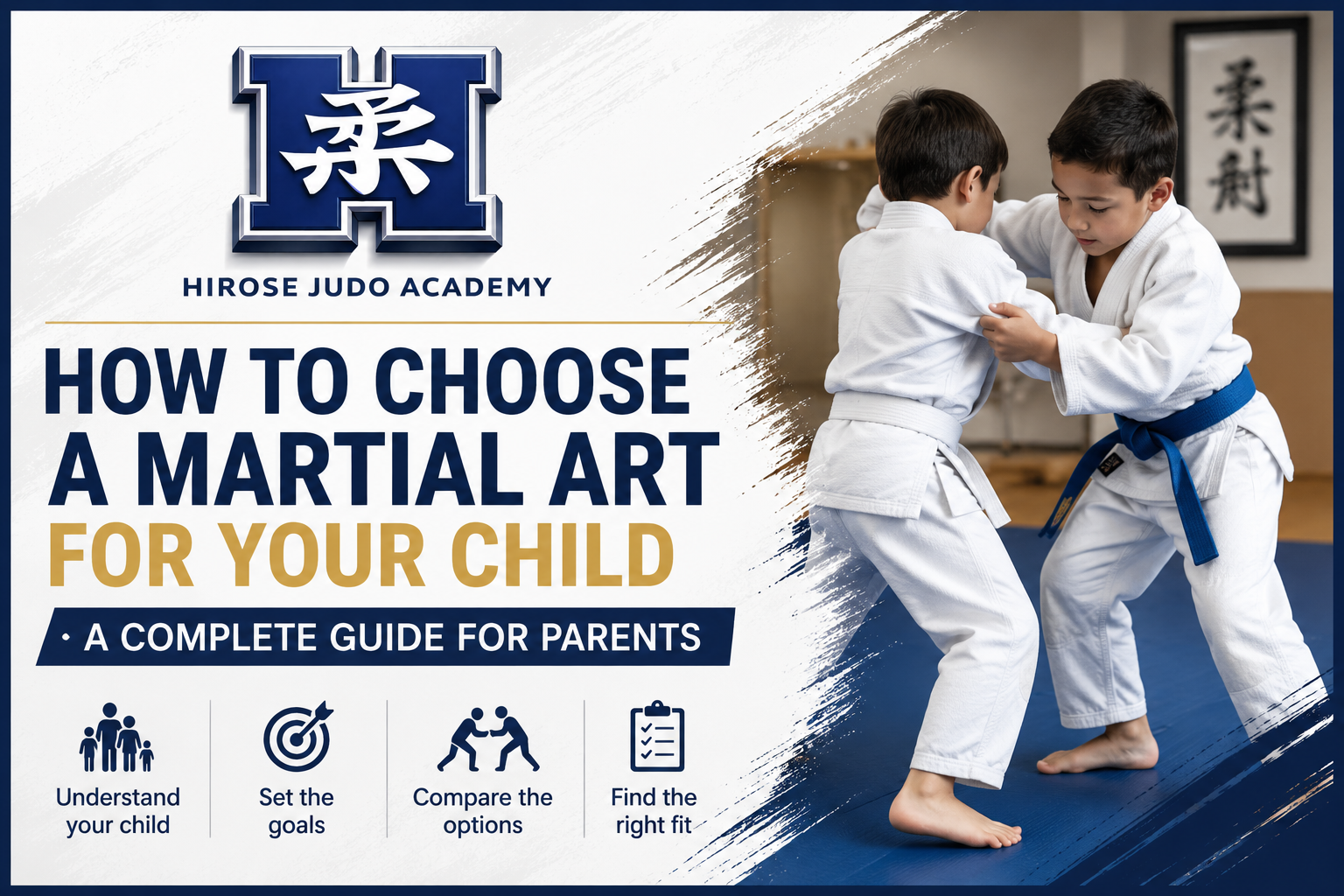
How to Choose a Martial Art for Your Child
Choosing a martial art for your child can be difficult. Judo, karate, taekwondo and Brazilian jiu-jitsu can all be excellent activities for children, but they offer very different training experiences.
The best martial art is not necessarily the most popular one or the one another parent recommends. It should suit your child’s personality, interests, learning style and goals.
If you are still exploring the main options, our Best Martial Arts for Kids guide provides a broader overview.
Quick Answer: How Should You Choose?
Start by thinking about how your child enjoys moving and learning.
- Judo: throws, balance, gripping, grappling and active partner work
- BJJ: groundwork, control and positional problem-solving
- Karate: punches, kicks, forms and structured technical practice
- Taekwondo: kicking, speed, flexibility and dynamic movement
The best choice is usually the martial art your child enjoys enough to keep practising consistently.
Step 1: Start With Your Child’s Personality
Instead of asking, “Which martial art is best?”, start with a different question: Which martial art is likely to suit my child?
Children learn in different ways. Some enjoy close physical interaction, while others prefer having more personal space. Some like repeating movements until they become precise, while others enjoy reacting to another person and solving problems in real time.
- Does your child enjoy physical contact?
- Do they enjoy partner activities?
- Do they prefer structured repetition?
- Do they enjoy fast and dynamic movement?
- Do they enjoy physical problem-solving?
- Are they naturally competitive?
There are no right or wrong answers. The goal is simply to identify the type of training your child is most likely to enjoy.
Step 2: Decide What You Want Your Child to Gain
Parents choose martial arts for many different reasons. For some families, confidence is the priority. For others, it may be discipline, fitness, coordination, social development or competition.
Confidence
Martial arts can help children build confidence by giving them regular opportunities to learn difficult skills, make mistakes and gradually improve.
Confidence is rarely created simply by telling a child to “be confident”. It develops when children experience genuine progress.
Read our guide to the Best Martial Arts for Confidence in Kids .
Discipline
Good martial arts training requires children to listen, practise consistently, follow rules and show respect to training partners.
Discipline should not simply mean making children quiet. It should help them develop self-control, responsibility and the ability to keep working when something becomes difficult.
See our guide to the Best Martial Arts for Discipline in Kids .
Shy Children
A shy child does not necessarily need a martial art with less interaction. Some quieter children respond very well to structured partner activities because they have a clear purpose for communicating and working with another child.
Others may initially prefer an activity with more individual space.
You can read more in our Best Martial Arts for Shy Kids guide.
Step 3: Grappling or Striking?
One of the simplest ways to narrow the choice is to understand the difference between grappling and striking martial arts.
| Martial Art | Type | Main Focus |
|---|---|---|
| Judo | Grappling | Throws, gripping, balance, groundwork and partner movement |
| Brazilian Jiu-Jitsu | Grappling | Ground positions, control, escapes and submissions |
| Karate | Striking | Punches, kicks, blocks, stances and forms |
| Taekwondo | Striking | Kicking, speed, flexibility and dynamic movement |
Step 4: Think About How Your Child Likes to Learn
Children Who Enjoy Physical Interaction
Judo and BJJ may appeal to children who enjoy learning through physical interaction with another person.
Because the partner is constantly moving and reacting, children receive immediate feedback and have to adapt their technique.
Children Who Enjoy Structured Repetition
Some children enjoy repeating movements, learning sequences and improving technical precision. Karate may particularly appeal to children who enjoy this type of structured practice.
Children Who Enjoy Fast Movement
Taekwondo may appeal to children who enjoy dynamic kicking, speed, flexibility and athletic movement.
Children Who Enjoy Physical Problem-Solving
Judo and BJJ both involve solving problems against another person.
Judo generally places greater emphasis on standing balance, throwing and transitions into groundwork, while BJJ generally focuses more heavily on groundwork and positional control.
Step 5: Compare the Main Martial Arts for Kids
Judo
Judo is a Japanese grappling martial art and Olympic sport. Children learn throwing, gripping, balance, movement, groundwork and ukemi, or safe falling.
Judo may suit children who enjoy active partner work and learning through physical interaction.
Karate
Karate primarily focuses on striking. Depending on the style and school, children may practise punches, kicks, blocks, stances, forms and controlled sparring.
It can appeal to children who enjoy structured technical practice and striking skills.
If you are deciding between these two martial arts, read our Judo vs Karate for Kids comparison.
Taekwondo
Taekwondo is particularly known for kicking techniques, speed, flexibility and dynamic movement.
It may appeal to children who enjoy energetic striking and athletic kicking skills.
See our detailed comparison: Judo vs Taekwondo for Kids .
Brazilian Jiu-Jitsu
Brazilian jiu-jitsu is another grappling martial art.
Compared with judo, BJJ generally places greater emphasis on groundwork, positions, control and submissions, while judo places greater emphasis on standing grappling and throwing alongside groundwork.
Which Martial Art May Suit Your Child?
| If Your Child Enjoys… | Consider Exploring… |
|---|---|
| Throwing, balance and active partner work | Judo |
| Ground grappling and positional problem-solving | Brazilian Jiu-Jitsu |
| Punches, kicks and structured technical repetition | Karate |
| Kicking, flexibility and fast movement | Taekwondo |
| Standing and ground grappling | Judo |
| Constant partner interaction | Judo or BJJ |
This is a general guide only. Individual clubs and instructors may teach the same martial art in very different ways.
Step 6: Ask What Your Child Actually Enjoys
Parents naturally think about what will be good for their child. But long-term development requires consistency, and consistency becomes much easier when the child genuinely enjoys the activity.
A martial art may offer many potential benefits, but those benefits are unlikely to develop if the child wants to stop after only a few weeks.
“Which martial art has the most benefits?”
Ask:“Which martial art will my child want to keep learning?”
Step 7: Let Your Child Experience the Martial Art
Comparison guides can help narrow the options, but they cannot completely predict how your child will respond to an actual class.
If possible, let your child try the martial art before making a long-term decision.
Afterwards, ask simple questions such as:
- Did you enjoy it?
- Did you like the type of movement?
- Did you enjoy practising with other children?
- Was there anything you particularly liked?
- Would you like to come back?
You are not looking for perfect technique or instant confidence. You are looking for interest and willingness to continue.
When Might Judo Be a Good Choice?
Judo may be worth trying if your child:
- Enjoys physical, hands-on learning
- Likes working directly with a partner
- Enjoys wrestling or grappling
- Likes learning through movement
- Enjoys physical problem-solving
- Would benefit from developing balance and coordination
- Wants to learn both standing and ground grappling
Children do not need to already be strong, aggressive or confident before starting judo.
Technique, balance, timing and consistent practice are central parts of learning the sport.
There Is No Perfect Martial Art for Every Child
For one child, karate may be the right choice. Another may love taekwondo. Another may become completely absorbed in Brazilian jiu-jitsu. And another may immediately enjoy throwing, grappling and partner work in judo.
The goal is not to choose the martial art that looks most impressive.
The goal is to find an activity where your child can enjoy learning, experience challenges, develop skills and continue progressing over time.
Once You Choose Judo, Choose the Right Club
Choosing the martial art and choosing the club are two different decisions.
If you decide that judo may suit your child, the next step is evaluating the coach, safety, beginner pathway, class structure and training environment.
We cover these factors separately in our How to Choose a Judo Club for Kids guide.
Would Your Child Enjoy Judo?
The easiest way to find out is to experience it.
Hirose Judo Academy provides structured kids judo training on the Gold Coast for complete beginners through to children who want to progress into competition.
Our focus is on strong fundamentals, safe progression and long-term development.
Book a Free TrialFrequently Asked Questions
What is the best martial art for a child?
There is no single best martial art for every child. The right choice depends on personality, interests, learning style and the type of movement they enjoy. Judo, BJJ, karate and taekwondo can all be good options.
How do I know which martial art my child will like?
Consider whether your child prefers grappling or striking, partner interaction or more individual practice, and structured repetition or reactive problem-solving. A trial class can then help you see how they respond in practice.
Is judo good for children?
Judo can be a good choice for children who enjoy active partner work, throwing, balance, grappling and physical problem-solving. Children also learn safe falling as part of beginner training.
Should a shy child do martial arts?
A shy child can enjoy martial arts, but there is no single style that suits every shy child. Some enjoy structured partner interaction, while others initially prefer more individual space.
Should I choose the martial art or the instructor first?
First identify the type of martial art your child may enjoy. Once you have narrowed the choice, evaluate the actual instructor and club carefully. The same martial art can provide very different experiences at different schools.