Best Martial Arts for Kids: How to Choose the Right One for Your Child
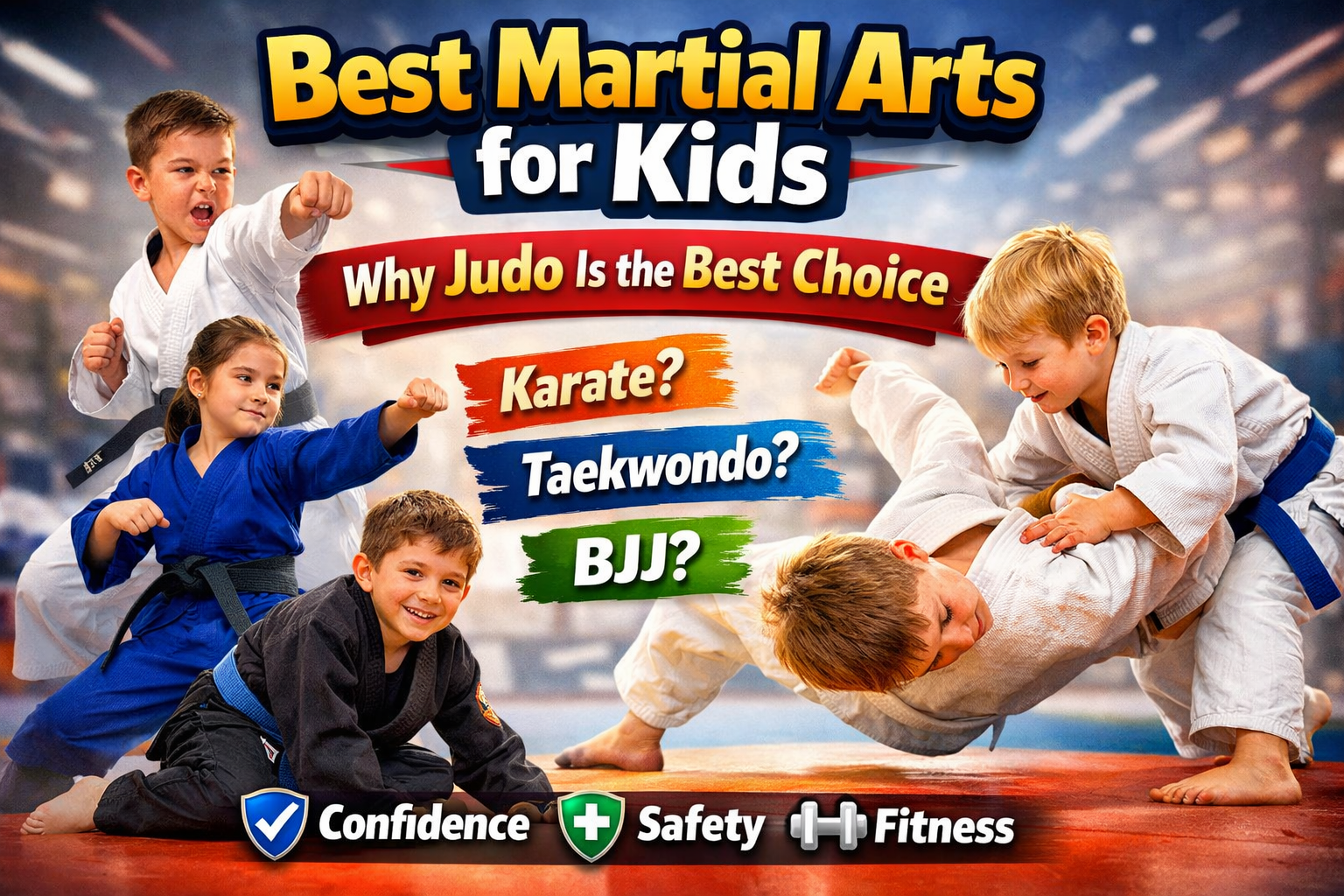
Judo, Brazilian Jiu-Jitsu, karate and taekwondo can all be excellent martial arts for children. But they develop different skills, use different types of movement and may suit different personalities.
The best martial art for your child is not necessarily the one that is most popular, the most competitive or the one another family recommends. It is the one that provides a safe, positive environment your child enjoys enough to continue.
What Are the Best Martial Arts for Kids?
There is no universal ranking that works for every child. However, four of the most common options parents consider are:
🥋 Judo
Judo is a Japanese martial art and Olympic sport built around throws, balance, gripping, safe falling and groundwork.
Children spend significant time training with partners and learning how to move against controlled resistance.
🤼 Brazilian Jiu-Jitsu
Brazilian Jiu-Jitsu, or BJJ, is primarily a grappling martial art. Training generally places strong emphasis on groundwork, positional control, escapes and submissions.
🥊 Karate
Karate is primarily a striking martial art. Children may learn punches, kicks, blocks, stances, technical drills and kata depending on the style and school.
🦵 Taekwondo
Taekwondo is known particularly for kicking techniques, speed, flexibility and dynamic movement. Classes may include technical drills, patterns and sparring.
Martial Arts for Kids: Quick Comparison
| Area | Judo | BJJ | Karate | Taekwondo |
|---|---|---|---|---|
| Main focus | Throws, balance and groundwork | Ground grappling and positional control | Striking, stances and forms | Kicking, speed and striking |
| Partner contact | High | High | Varies | Varies |
| Standing grappling | Major focus | Varies by academy | No | No |
| Groundwork | Yes | Major focus | Usually limited | Usually limited |
| Striking | No in normal sport training | No in normal sport training | Yes | Yes |
| Safe falling | Core beginner skill | May be taught where takedowns are included | Usually not central | Usually not central |
| Competition | Optional | Optional | Optional | Optional |
These are general comparisons. Individual clubs can differ significantly in how they train children.
Judo for Kids
Judo combines standing and ground grappling. Children learn how to move safely with another person, control balance, grip appropriately, fall correctly and gradually perform throwing and groundwork techniques.
One distinctive feature of judo is ukemi — the ability to fall safely. This is normally introduced before more difficult throwing practice.
Children who enjoy physical problem-solving, partner interaction and learning how to control balance may particularly enjoy judo.
Parents who want to understand how beginners are introduced to judo can read What Should Kids Learn First in Judo?
Brazilian Jiu-Jitsu for Kids
Brazilian Jiu-Jitsu places much greater emphasis on groundwork. Children learn how to move between positions, escape control, maintain positions and gradually understand age-appropriate submission techniques.
BJJ can be particularly engaging for children who enjoy puzzles, detailed technique and prolonged ground grappling.
The amount of standing training varies significantly between BJJ academies.
Judo or BJJ?
If you are deciding between the two grappling sports, read our detailed comparison: Judo vs BJJ for Kids .
Karate for Kids
Karate generally focuses more heavily on striking, including punches, kicks, blocks, stances and structured technical practice.
Depending on the school, children may also spend significant time learning kata, pad work or controlled sparring.
Karate may appeal to children who enjoy structured repetition, striking techniques and practising movements with more personal space.
Judo or Karate?
Read our full Judo vs Karate for Kids comparison for a detailed look at grappling, striking, safety, confidence and learning style.
Taekwondo for Kids
Taekwondo generally places greater emphasis on kicking, speed, flexibility and movement at distance.
Children who enjoy dynamic kicking techniques, fast footwork and striking may naturally enjoy this style.
Judo or Taekwondo?
Read our detailed Judo vs Taekwondo for Kids comparison before deciding which style may suit your child.
Best Martial Art for Shy Kids
Shyness alone does not tell you which martial art a child should choose.
Some shy children enjoy judo or BJJ because structured partner work gradually helps them become more comfortable interacting with others.
Other children initially prefer karate or taekwondo because parts of the training may allow more individual space.
The coach’s approach is especially important. A shy beginner should be allowed to develop confidence gradually rather than being pushed immediately into difficult partner work or competition.
Best Martial Art for High-Energy Kids
High-energy children can enjoy almost any martial art if the class is engaging and appropriately structured.
Judo offers frequent whole-body partner movement. Taekwondo provides fast kicking and footwork. BJJ provides continuous positional problem-solving, while karate can provide structured repetition and striking drills.
The goal should not simply be to exhaust an energetic child. A good class teaches them how to direct energy, listen and remain controlled around other people.
Best Martial Art for Confidence
All four martial arts can provide opportunities for children to become more confident.
Confidence can develop when children learn difficult skills, practise consistently, interact successfully with others and recognise their own progress.
The important question is not which martial art claims to create the most confidence. It is whether the environment allows children to struggle, improve and succeed without unnecessary pressure.
Best Martial Art for Discipline
Discipline can develop in judo, BJJ, karate or taekwondo.
Good martial arts classes require children to listen, follow rules, practise consistently and behave responsibly with other students.
Discipline should not simply mean creating a quiet child. A stronger goal is helping children learn self-control, responsibility and how to respond appropriately when training becomes difficult.
Which Martial Art Is Safest for Kids?
No martial art is completely injury-free.
Judo and BJJ involve close-contact grappling. Karate and taekwondo involve striking. Each creates different physical demands and potential risks.
For children, safety depends heavily on:
- Coaching quality
- Age-appropriate techniques
- Suitable partner matching
- Controlled practice
- Supervision
- Progressive introduction to live training
- A safe training environment
Parents considering judo can read our detailed guide: Is Judo Safe for Kids?
What Age Should Kids Start Martial Arts?
The right age depends on the child and the type of class.
Younger children generally need shorter, movement-based sessions with simple instructions, while older children can usually handle more detailed technical training.
Read our age-by-age guide: What Age Should Kids Start Judo?
Does Your Child Need to Compete?
No.
Competition can be valuable for children who enjoy it, but it does not need to be the purpose of martial arts training.
Children can train for confidence, coordination, fitness, discipline, technical development and enjoyment without competing.
How to Choose the Right Martial Arts School for Your Child
The quality of the school may be more important than the name of the martial art.
Before joining, parents should look for:
- Coaches who communicate well with children
- A clear beginner pathway
- Age-appropriate training
- Safe partner matching
- A respectful training environment
- No unnecessary pressure to compete
- Clear communication with parents
- Progression based on readiness rather than rushing
You can read our detailed guide to choosing a judo club for kids for more guidance on what parents should look for.
So, What Is the Best Martial Art for Kids?
There is no martial art that is automatically best for every child.
Judo may be a strong choice if your child enjoys:
- Throws and grappling
- Partner interaction
- Balance and movement
- Learning to fall safely
- Both standing and groundwork
BJJ may be a strong choice if your child enjoys:
- Ground grappling
- Technical problem-solving
- Positional control
- Escapes and transitions
Karate may be a strong choice if your child enjoys:
- Punches and kicks
- Structured technical repetition
- Forms or kata
- More individual practice
Taekwondo may be a strong choice if your child enjoys:
- Kicking
- Fast movement
- Flexibility
- Dynamic striking
Kids Judo on the Gold Coast
If judo sounds like a good match for your child, Hirose Judo Academy provides structured kids judo classes on the Gold Coast for complete beginners through to competitive athletes.
Our beginner pathway starts with safe falling, movement, coordination and fundamental skills before progressing into more challenging partner practice.
You can also learn more about Hirose Judo Academy on the Gold Coast and our overall coaching and development pathway.
Let Your Child Experience Judo
Reading comparisons is useful, but the best way to know whether your child enjoys judo is to experience a real class.
📍 Carrara, Gold Coast
🥋 Complete beginners welcome
⭐ Structured, age-appropriate training
🎁 Free trial available
Best Martial Arts for Kids: Frequently Asked Questions
What is the best martial art for kids?
There is no universal best martial art. Judo, BJJ, karate and taekwondo all develop different skills. The best choice depends on the child, the quality of the coach and whether the child enjoys training consistently.
Which martial art is best for shy kids?
There is no single best choice for shy children. Some may benefit from structured partner interaction in judo or BJJ, while others may initially prefer the greater individual space found in some karate or taekwondo classes.
Which martial art is best for confidence?
All major martial arts can help children develop confidence when progress is gradual and the training environment is supportive.
Is judo good for children?
Judo can help children develop balance, coordination, safe falling, partner awareness and technical grappling skills when taught appropriately.
Is BJJ or judo better for kids?
Judo generally places greater emphasis on standing grappling, throws and balance, while BJJ spends more time on groundwork. Neither is automatically better for every child.
What age should a child start martial arts?
Many children can begin age-appropriate martial arts classes around five or six, although readiness and class structure matter more than one exact age.
Should children compete in martial arts?
Competition can be useful for children who enjoy it, but it is not required. Children can gain many benefits from martial arts without competing.