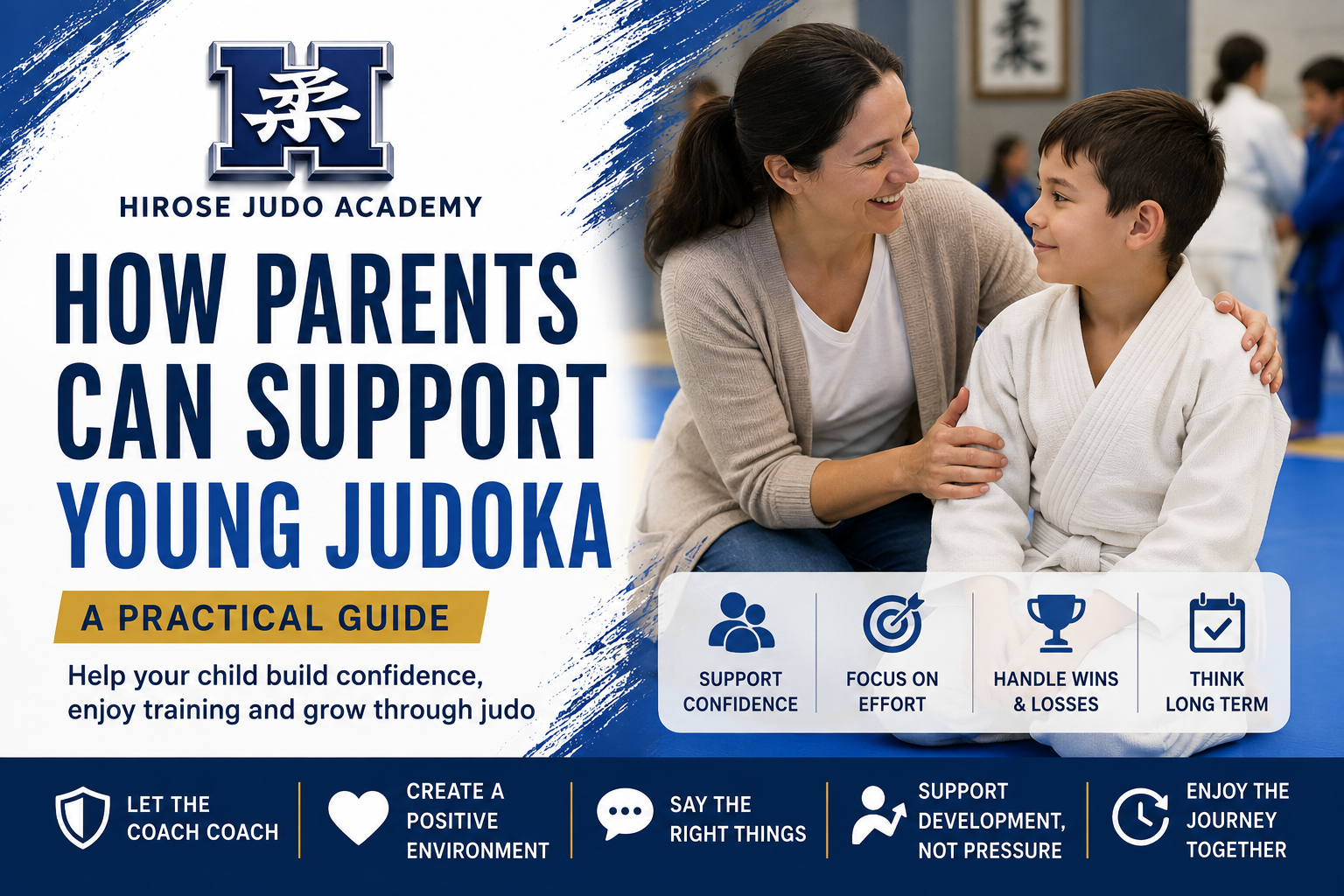
How Can Parents Support Young Judoka?
Parents have a powerful influence on a child’s experience in judo. The best support is not about becoming a second coach or pushing for more medals. It is about creating an environment where children can learn, enjoy training, handle challenges and develop at their own pace.
Support consistent training, let the coach handle technical instruction, focus on effort and learning rather than medals, avoid comparing your child with other judoka, and keep your reactions balanced after both wins and losses.
The long-term goal is not simply to produce better competition results. It is to help your child develop a healthy relationship with judo.
What Is the Parent’s Role in Youth Judo?
Parents are an essential part of a young judoka’s development, but their role is different from the role of the coach.
A coach is responsible for areas such as technique, tactics, training progression and competition preparation.
Parents can provide something equally important:
- Encouragement
- Consistency
- Transport and practical support
- Healthy routines
- Perspective after difficult days
- A safe place away from competition pressure
Problems can arise when these roles become confused.
1. Support Consistent Training
One of the most useful things parents can do is also one of the simplest: help children attend training consistently.
Judo skills take time to develop. Ukemi, movement, gripping, throwing and groundwork improve through repeated practice, not occasional bursts of motivation.
Parents can support this by helping children:
- Arrive on time
- Bring the correct uniform and equipment
- Develop a regular training routine
- Eat and sleep appropriately around training
- Attend even when motivation is not perfect
2. Let the Judo Coach Coach
It is natural for parents to want to help. However, giving technical instructions from the side of the mat can create confusion, particularly when those instructions differ from what the coach is teaching.
Imagine a child hearing:
Parent: “Attack! Go forward! Throw them!”
The child now has two different jobs to process at the same time.
During training and competition, technical instruction should normally come from the coach.
Parents can instead say:
“Do your best.”
“Enjoy your training.”
“Keep learning.”
3. Avoid Comparing Your Child With Other Judoka
Children develop at very different rates.
Two young judoka of the same age may differ significantly in:
- Physical maturity
- Training experience
- Confidence
- Coordination
- Competitive experience
- Emotional maturity
This is why statements such as “They started after you and they are already better” are rarely helpful.
A better comparison is with the child’s previous self.
Is their favourite technique improving?
Are they more confident during randori?
Can they recover from mistakes more quickly?
These are meaningful signs of development even when medals do not change.
4. Understand the Purpose of Competition
Competition can be a valuable learning tool, but it should not become the only measure of whether a child is improving.
A tournament can reveal:
- Whether techniques work against unfamiliar opponents
- How the child responds to pressure
- Where gripping or movement needs improvement
- How they respond after mistakes
- What should be developed during the next training block
Winning is useful information. Losing is useful information too.
5. Do Not Rush Your Child Into Competition
Parents sometimes worry that their child will fall behind if they do not start competing early.
There is no need to rush.
Before entering competition, children should generally have enough technical, physical and emotional readiness to make the experience useful.
Safe ukemi, basic technical control, understanding simple rules and being able to manage normal randori are more important than reaching a particular birthday.
6. More Competition Is Not Always Better
Once children start competing, it can be tempting to enter every available tournament.
But competition only becomes useful when there is enough training between events to develop what the previous tournament revealed.
If the calendar becomes:
there may not be enough time for meaningful development.
7. What Should Parents Say Before a Judo Competition?
The hours before competition are usually not the best time to add more expectations.
Keep the message simple.
Helpful
“Do your best.”
“Listen to your coach.”
“Try the judo you have been practising.”
“Enjoy the experience.”
Try to Avoid
“You should win today.”
“That opponent isn’t very good.”
“You have to get a medal.”
“Don’t lose the first match.”
Even comments intended as encouragement can become pressure when a child believes parental approval depends on the result.
8. What Should Parents Do During a Judo Match?
Watching your child compete can be emotional. But the athlete already has enough to process.
The referee is giving commands. The opponent is attacking. The coach may be providing tactical information.
Additional technical instructions from the spectator area can make things harder.
Encourage good effort and sportsmanship, but allow the child to experience the match rather than trying to control it from outside the mat.
9. What Should Parents Say After a Competition?
The first conversation after competition can shape how a child interprets the entire day.
You do not need to analyse the match immediately.
Start with the child.
“What did you enjoy?”
“What did you learn?”
“Was there anything you were proud of?”
Technical analysis can happen later with the coach.
10. How Should Parents Respond When Their Child Loses?
Losing is difficult, especially when a child has trained hard.
It is tempting to immediately explain why they lost or tell them what they should have done differently.
Often, the better first response is simply to give them some space.
Once emotions settle, losing can become valuable information:
- What worked?
- Where did the match become difficult?
- What can be improved?
- What should we work on next?
Children who learn that losing is something they can recover from develop skills that extend far beyond judo.
11. How Should Parents Respond When Their Child Wins?
Winning deserves to be enjoyed. Children should be allowed to feel proud of something they worked hard to achieve.
But winning also needs perspective.
One gold medal does not mean the child suddenly needs more competitions, harder training or greater expectations.
Ask the same questions you would after a loss:
- What did you learn?
- What worked well?
- What still needs improvement?
- What do you want to work on next?
12. Help Protect Your Child’s Motivation
Young athletes will not always be equally motivated.
There will be exciting periods and difficult periods. Progress may slow, friends may improve faster and competition results may fluctuate.
Parents can help by keeping attention on things the child can influence:
- Effort
- Attendance
- Attitude
- Learning
- Trying new skills
- Responding to setbacks
Results are important in competitive sport, but they are not completely controllable.
Process is.
13. Watch for Signs of Too Much Pressure
Not every difficult day means a child should stop competing. However, repeated changes in behaviour deserve attention.
Possible warning signs include:
Training Anxiety
The child becomes consistently distressed before normal training.
Fear of Losing
Avoiding competition mainly because losing feels unacceptable.
Loss of Enjoyment
Judo becomes primarily about results rather than learning or participation.
Constant Comparison
Self-worth becomes tied to beating teammates or rivals.
Perfectionism
Small mistakes cause disproportionate frustration.
Wanting to Quit After Losing
One disappointing result suddenly feels like proof they should stop.
When these patterns appear, parents and coaches should communicate. Sometimes the solution is not quitting judo—it may simply be reducing competition pressure and returning attention to training and enjoyment.
14. Support Confidence Without Removing Every Challenge
Supporting children does not mean protecting them from every difficult experience.
Judo naturally includes:
- Being thrown
- Making mistakes
- Facing stronger partners
- Learning difficult techniques
- Losing matches
When these challenges are appropriate for the child’s level and managed safely, learning to work through them can contribute to confidence and resilience.
15. Think About the Long-Term Judo Journey
Youth judo development is rarely a straight line.
Children grow at different times. Their motivation changes. They win and lose. Techniques that once worked may stop working against stronger opponents.
This is normal.
Parents can provide valuable stability by resisting the temptation to judge development from one tournament, one season or one difficult month.
A child who continues learning, develops good habits, becomes more confident and still enjoys stepping onto the tatami is building something much more valuable than a collection of junior medals.
How Parents Can Support Young Judoka: The Key Principles
Parents do not need specialist judo knowledge to provide excellent support.
Focus on the fundamentals:
- Support consistent training
- Let the coach handle technical coaching
- Avoid comparing children
- Do not rush competition
- Keep wins and losses in perspective
- Focus on effort, learning and development
- Listen when your child is struggling
- Communicate with the coach when needed
- Protect enjoyment
- Think long term
Frequently Asked Questions
How can parents support kids in judo?
Parents can support children by encouraging consistent training, allowing the coach to manage technical instruction, focusing on effort and learning rather than only results, and maintaining perspective after both wins and losses.
Should parents coach their child from the side of the mat?
Technical instruction should generally come from the judo coach. Multiple instructions can confuse young athletes, especially during competition. Parents can provide encouragement while allowing the coach to coach.
What should I say to my child before a judo competition?
Keep expectations simple. Encourage your child to listen to their coach, try the judo they have practised, give good effort and enjoy the experience rather than focusing only on winning.
What should I say after my child loses a judo match?
Allow emotions to settle before analysing the match. Ask how your child felt and what they learned. Technical analysis can happen later with their coach.
Should I reward my child for winning judo medals?
It is fine to celebrate success, but try not to make rewards or parental approval dependent only on medals. Recognising effort, improvement, sportsmanship and persistence helps keep success in perspective.
How do I know if my child is under too much pressure in judo?
Persistent anxiety about training, extreme fear of losing, loss of enjoyment, constant comparison with others or wanting to quit after every disappointing result may indicate that competition pressure should be reviewed.
Should my child compete in judo?
Competition can be useful when it matches the child’s technical and emotional readiness and supports their development. Not every child needs to compete, and there is no need to rush into tournaments.
How often should kids compete in judo?
Competition frequency should depend on age, training experience, goals and recovery. Younger children generally need substantially more training than competition, with enough time between events to learn and improve.
Supporting Your Child’s Judo Journey
At Hirose Judo Academy on the Gold Coast, we focus on strong fundamentals, confidence and long-term development. Children can learn judo at their own pace, with competition introduced when it becomes appropriate for their development.