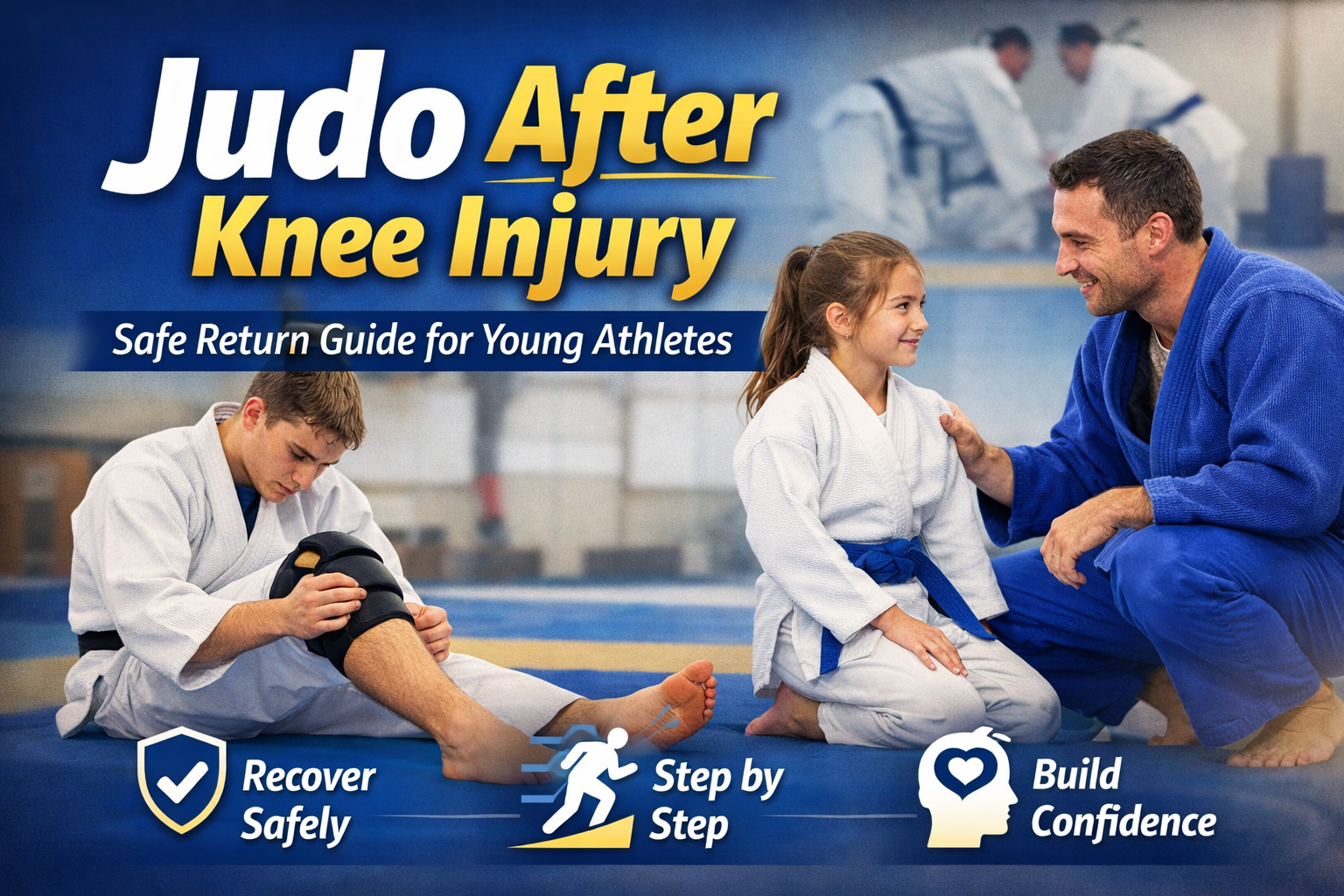
Returning to judo after a knee injury can be challenging — not just physically, but mentally as well.
For young athletes, the process needs to be gradual, structured, and well supported.
In this guide, we’ll explain how to safely return to judo training after a knee injury, what to avoid, and how parents and coaches can support the process.
1. When Can You Return to Judo After a Knee Injury?
There is no “one-size-fits-all” answer.
Return to training depends on:
- Type of injury (e.g. ligament, meniscus)
- Severity
- Rehabilitation progress
- Medical clearance
For serious injuries like an Anterior Cruciate Ligament injury, recovery may take 6–12 months or longer.
👉 The key is not rushing the process.
2. Step-by-Step Return to Training
A safe return to judo should follow stages:
Stage 1: Basic Movement & Stability
- Walking, light jogging
- Balance exercises
- Controlled strength training
Stage 2: Judo-Specific Movements
- Uchikomi (no throwing)
- Footwork drills
- Controlled entries
Stage 3: Controlled Randori
- Light intensity
- Trusted training partners
- No explosive movements
Stage 4: Full Training & Competition
- Only when physically and mentally ready
- Gradual increase in intensity
👉 Skipping steps increases the risk of re-injury.
3. What to Avoid (Common Mistakes)
Many athletes return too early.
Avoid:
- Jumping straight into randori
- Training through pain
- Comparing with others
- Ignoring fatigue
👉 Recovery is not a race.
4. The Mental Challenge: Fear After Injury
Even if the knee is healed, many athletes feel:
- Fear of re-injury
- Hesitation during attacks
- Loss of confidence
This is completely normal.
👉 We explain this in detail here:
→ Fear after injury in sports
5. A Real Example: Returning from ACL Injury
In our dojo, we have seen athletes return from serious injuries and perform at a high level again.
One example is a young athlete who came back from an Anterior Cruciate Ligament injury and successfully returned to international competition.
👉 You can read the full story here:
→ ACL recovery in judo
6. How Parents Can Support the Process
Parents play a critical role in recovery.
Key points:
- Be patient — progress takes time
- Focus on long-term development, not quick results
- Support both physical and mental recovery
👉 For a complete guide for parents:
→ How to support injured young athletes
7. Final Thoughts
Returning to judo after a knee injury is not just about getting back on the mat.
It’s about:
- Rebuilding strength
- Regaining confidence
- Creating a safer, stronger athlete for the future
With the right approach, many young athletes come back even stronger.
Train Safely. Progress Gradually. Build Long-Term Strength.
If your child is returning from injury and you’re unsure how to proceed, feel free to reach out or join a trial session.
We focus on safe, structured development for every athlete.
Gold Coast Judo Guide
Looking for the best judo classes on the Gold Coast?
Explore our complete guide for kids and beginners, including what to look for in a club and how to get started.