
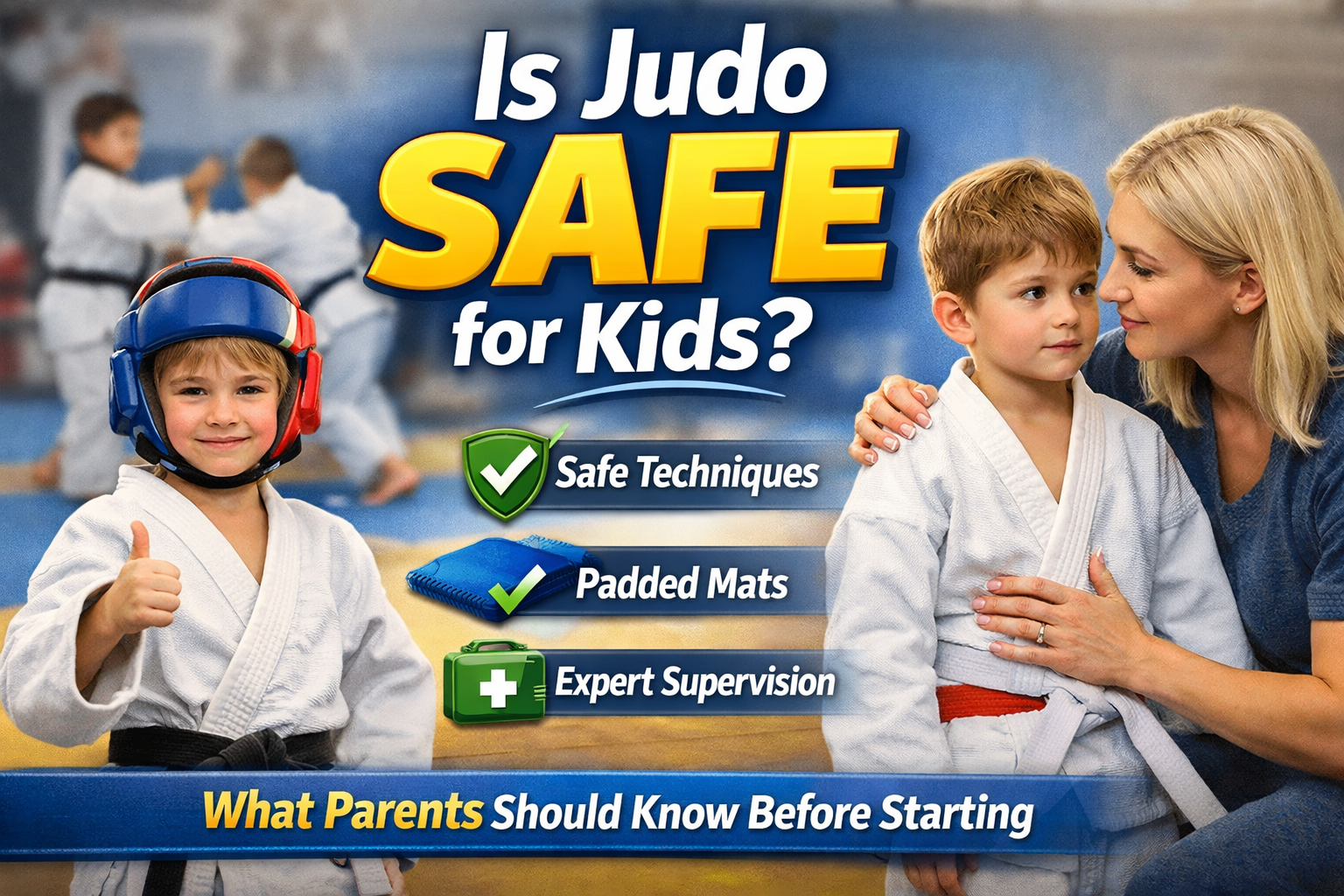
Is Judo Safe for Kids?
Judo can look physical from the outside, so it is natural for parents to ask whether it is safe for children. The honest answer is that no sport is completely risk-free, but well-coached judo uses safe falling, controlled partner work, age-appropriate techniques and gradual progression to help children train safely.
At Hirose Judo Academy, many new parents ask the same question before their child’s first class: “Is judo safe for kids?”
It is an important question. Children are still developing physically and emotionally, and a good judo program should never treat them like small adults. Beginners need time to become comfortable with movement, falling, contact and partner practice.
In our judo training for kids on the Gold Coast, safety is not a short warm-up before the “real” training. It is part of every stage of learning.
Why Judo Can Be Safe for Kids
Judo is built around learning how to move, lose balance and land correctly. Unlike many activities in which a child may fall unexpectedly, judo teaches falling as a skill from the beginning.
Safe Falling Comes First
Children learn ukemi, or breakfalls, before they practise full throws. They begin close to the mat and progress gradually as their confidence and control improve.
Training Is Controlled
Beginner practice should be cooperative. Children learn the movement slowly before adding speed, resistance or more difficult situations.
Techniques Are Age-Appropriate
A five-year-old should not train in the same way as a teenager. Exercises, techniques and class intensity should match the child’s age, size and experience.
Partners Are Matched Carefully
Coaches should consider size, strength, skill level, confidence and behaviour when choosing training partners.
Coaches Supervise Closely
A coach must watch the whole class, stop unsafe movement quickly and make sure children understand the rules before practice becomes more demanding.
Progression Is Gradual
Children should not be rushed into hard randori or competition. Confidence, control and good habits need to come first.
Why ukemi matters
Ukemi is the foundation of safe judo. Children learn how to protect their head, keep a safer body position and spread the impact of a fall.
Read our detailed guide: How to Teach Ukemi to Children .
Is Judo Dangerous for Kids?
Judo involves throws, groundwork and physical contact, so it would be misleading to say that injuries can never happen. Children can experience bumps, bruises, strains or other injuries, just as they can in football, gymnastics, rugby, basketball or playground activity.
The more useful question is: How is the risk managed?
Judo becomes less safe when beginners are rushed, children are badly matched, hard sparring starts too early, or a coach allows poor control. It becomes safer when the class is structured, the mat area is suitable, safe falling is practised regularly and the coach adjusts the training to the child.
For a broader discussion of risk in judo, read Is Judo Dangerous? A Coach’s Honest Answer .
What Happens in a Beginner Kids Judo Class?
A good first class should not begin with children throwing each other at full speed. Beginners usually start with simple activities that help the coach assess their listening, coordination, confidence and body control.
| Stage | What Children Learn | Why It Matters |
|---|---|---|
| Warm-up | Running, movement games and simple coordination exercises | Prepares the body and helps children feel comfortable |
| Ukemi | Backward, side or rolling breakfall progressions | Builds safer landing habits before throwing |
| Movement | Balance, posture, footwork and body control | Creates a stable foundation for later techniques |
| Partner work | Controlled gripping, movement and cooperative drills | Teaches awareness, respect and safe contact |
| Simple judo | Basic groundwork or carefully selected beginner techniques | Lets children experience real judo without unnecessary pressure |
Our guide to what kids should learn first in judo explains these foundations in more detail.
A coach’s honest view
The safest child is not always the strongest or most athletic child. It is often the child who listens, stays calm, respects their partner and develops good falling habits.
That is why character, control and technique are just as important as physical ability in junior judo.
What Can Increase the Risk of Injury?
Parents do not need to understand every judo technique, but they should know which training habits deserve attention.
- Teaching throws before a child is comfortable with falling
- Matching children with a large difference in size, strength or experience
- Allowing uncontrolled play or rough behaviour
- Introducing hard randori before the child has basic skills
- Continuing training when a child is injured, unwell or extremely tired
- Using an overcrowded or poorly organised training area
- Prioritising competition results over long-term development
A safe club does not remove every challenge. Children still need to learn how to handle contact, mistakes and difficult situations. The difference is that these challenges are introduced in a controlled way.
How to Choose a Safe Judo Club for Your Child
The quality of the coaching environment matters more than the name of the martial art. Before joining, watch a class or attend a trial and look for the following signs.
- Beginners learn ukemi before full throwing practice
- The coach gives clear, simple instructions
- Children are grouped or matched appropriately
- The class is organised rather than chaotic
- Unsafe behaviour is corrected immediately
- Children are encouraged without being forced
- Training intensity matches age and experience
- The mat area is clean, suitable and free from hazards
- Parents are able to ask questions about training and progression
- Competition is optional for beginners
You can also read our complete guide to choosing a judo club for kids .
At What Age Is Judo Safe for Kids to Start?
Many children can begin judo from around five or six years old, although readiness is more important than one exact age. Younger children usually benefit from shorter, play-based classes focused on listening, movement, balance and safe falling.
A child may be ready to start when they can:
- Follow short and simple instructions
- Take turns with a partner
- Stay in the training area
- Accept gentle correction from a coach
- Participate without becoming overwhelmed by physical contact
Children develop at different rates. Starting later does not prevent a child from becoming skilled or competitive.
For more guidance, read What Age Should Kids Start Judo? .
Can Parents Watch the First Judo Class?
Yes. At Hirose Judo Academy, parents are welcome to watch and see how the class is organised. Observing a session is one of the best ways to understand how safety, discipline and progression work in practice.
During a trial class, parents can look at:
- How the coach explains activities
- Whether children appear calm and engaged
- How partners are selected
- Whether beginners receive enough attention
- How quickly the coach responds to unsafe behaviour
How Hirose Judo Academy Keeps Kids Training Safe
Hirose Judo Academy provides structured kids judo classes on the Gold Coast for beginners and experienced young athletes.
Our approach includes:
- Safe falling before throwing
- Step-by-step technical development
- Age-appropriate class content
- Controlled partner practice
- Strong expectations around respect and behaviour
- Optional competition pathways
- Long-term development rather than rushing results
Children do not need previous martial arts experience, and they do not need a judo uniform for their first trial. Comfortable sports clothes are suitable.
Explore our kids judo program
Learn about beginner classes, class times, what children learn and how to book a trial: Judo for Kids on the Gold Coast .
Frequently Asked Questions
Is judo safe for kids?
Judo can be safe for kids when it is taught by a responsible coach using safe falling, controlled practice, suitable partner matching and gradual progression.
Is judo dangerous for kids?
Judo has some injury risk because it is a physical contact sport. However, much of junior training is designed to manage that risk through ukemi, supervision, age-appropriate techniques and controlled partner work.
What is the safest skill children learn in judo?
Ukemi, or safe falling, is one of the most important early skills. Children normally practise falling from low positions before progressing to standing throws.
Do children get thrown in their first judo class?
Not necessarily. A beginner’s first class may focus on movement, balance, safe falling, simple groundwork and cooperative partner drills. Progress depends on the child’s age and confidence.
What age can kids safely start judo?
Many children start around five or six years old. Younger children should usually have shorter, play-based sessions, while older beginners can progress according to their coordination, confidence and ability to follow instructions.
Is judo safe for a child with no martial arts experience?
Yes. Most beginner programs expect children to have no previous experience. A good coach introduces contact, falling and techniques gradually.
Does my child have to compete?
No. Children can train for fitness, confidence, discipline, friendships and enjoyment. Competition should be optional.
Final Answer: Is Judo Safe for Kids?
Yes, judo can be a safe and valuable activity for children when it is taught properly.
The most important safety factors are not medals, belts or how quickly a child learns throws. They are:
- Learning how to fall safely
- Progressing step by step
- Training with appropriate partners
- Following clear rules
- Being supervised by a responsible coach
Parents should look for a calm, organised and supportive environment where children are taught control before intensity. When those foundations are in place, judo can help children become safer movers, more confident learners and more respectful training partners.
See a Kids Judo Class for Yourself
Book a free beginner-friendly trial at Hirose Judo Academy and see how children learn safe falling, movement and judo skills step by step.
Book a Free Trial View Kids Judo Classes