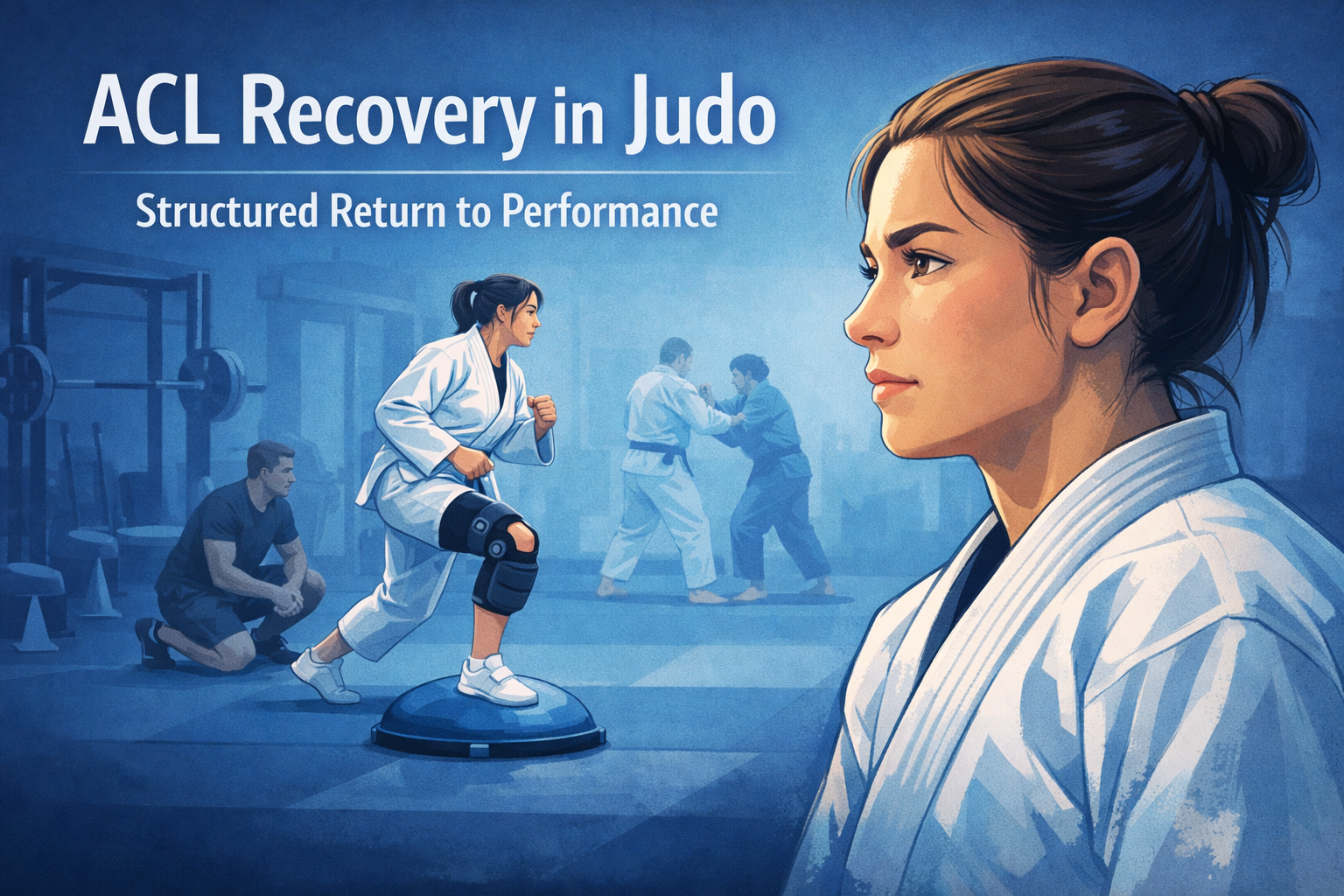
ACL injuries are one of the most challenging setbacks a young judoka can face.
Returning to judo after ACL reconstruction is not simply about healing the knee. It is about rebuilding movement, confidence, technical timing, and long-term resilience.
In judo, the knee is constantly exposed to rotational stress, sudden deceleration, directional changes, and unpredictable contact. A rushed return does not just risk re-injury — it can compromise an athlete’s entire developmental trajectory.
This article explores what a structured return-to-judo process should look like, especially for youth athletes aiming for sustainable high performance.
Why ACL Injuries Are Common in Judo
Judo involves:
- Rotational torque during throws
- Rapid directional changes
- Single-leg loading
- External force applied unpredictably
- Deep knee flexion under pressure
Techniques such as seoi-nage entries, uchi-mata transitions, and defensive pivots place complex demands on the knee joint.
Unlike linear sports, judo rarely stresses the knee in predictable patterns. The dynamic and reactive nature of the sport increases ACL vulnerability — particularly during growth phases in youth athletes.
The Biggest Mistake in Youth ACL Recovery
The most common mistake is simple:
Rushing the return.
This usually happens because:
- The athlete feels “pain-free”
- Strength numbers look acceptable
- Competition schedules create pressure
- Parents or coaches focus on short-term results
However, being pain-free is not the same as being performance-ready.
True readiness requires:
- Neuromuscular control under fatigue
- Technical efficiency under reactive conditions
- Psychological confidence in high-speed movement
- Symmetry in rotational stability
Without these elements, the knee may be structurally healed but functionally vulnerable.
What a Structured Return to Judo Should Include
A proper return-to-judo framework should follow progressive layers.
1. Rehabilitation Phase: Rebuild the Foundation
This stage focuses on:
- Restoring range of motion
- Quadriceps and hamstring strength symmetry
- Hip and glute stability
- Controlled single-leg balance
But for judoka, rehab must go beyond gym exercises.
Rotational control and stance stability must be reintroduced early — carefully and progressively.
2. Gradual Load Progression
Load progression must be layered.
The order matters:
- Controlled solo movement patterns
- Technical entries without resistance
- Light partner drills
- Positional randori
- Controlled situational sparring
- Full randori
- Competition
Skipping steps increases risk.
Each stage should be evaluated not only physically, but technically and psychologically.
3. Technical Rebuilding
After ACL surgery, many athletes unconsciously alter their mechanics.
Common adaptations include:
- Avoiding full pivot rotation
- Reduced knee bend in entries
- Hesitation in directional transitions
If not corrected, these compensations reduce performance and increase long-term risk.
Rebuilding technique must focus on:
- Clean entry mechanics
- Proper knee alignment under load
- Confident directional change
Technical recalibration is as important as strength recovery.
4. Psychological Readiness
ACL recovery is as much mental as physical.
At 16–18 years old, identity is often tied to performance.
Fear of re-injury can manifest as:
- Reduced aggression
- Delayed reaction
- Overthinking during transitions
Psychological return markers include:
- Confidence in explosive movement
- Comfort in unpredictable exchanges
- Willingness to attack without hesitation
A competition should never be the first psychological test.
Confidence must be rebuilt progressively in training.
When Is an Athlete Truly Ready to Compete Again?
The real question is not:
“Is the knee healed?”
The real question is:
“Is the athlete stable under competitive chaos?”
Competition readiness requires:
- Symmetrical loading capacity
- Reactive agility under fatigue
- Technical clarity at full speed
- Emotional composure
A structured development model does not ask:
“How soon can we return?”
It asks:
“How stable is the foundation?”
A Real-World Example of Long-Term Development
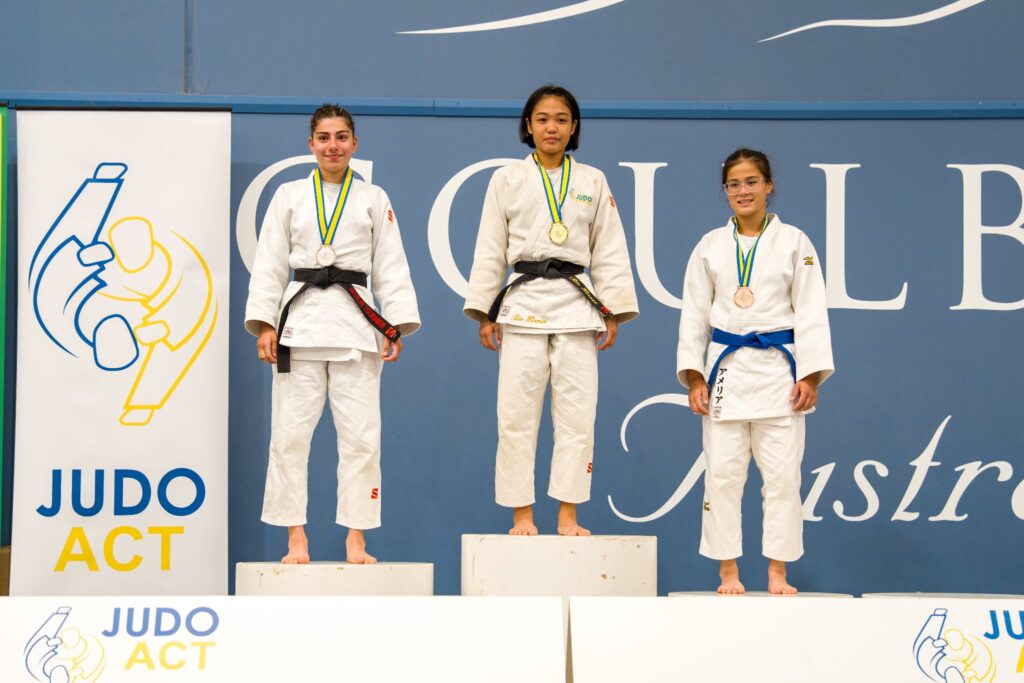
Return to competition after ACL reconstruction — the result of structured, patient progression.
Recently, one of our athletes returned from ACL reconstruction and won a competition positioned on the pathway toward national level.
The medal was visible.
What was invisible:
- Months of controlled progression
- Deliberate load management
- Technical rebuilding
- Psychological patience
The result was not built in a single event.
It was built layer by layer.
This is the difference between recovery and development.
After a serious knee injury, returning to judo is not just physical — it’s also mental.
Many athletes struggle with fear during this stage.
Why Long-Term Thinking Matters in Youth Judo
Youth athletes are still developing:
- Neuromuscular coordination
- Structural strength
- Hormonal stability
- Emotional resilience
An ACL injury during this phase can either:
- Disrupt development
- Or reinforce structural maturity
The outcome depends on decision-making.
Short-term urgency often sacrifices long-term capacity.
Structured progression protects potential.
👉 how to support injured young athletes
Sustainable Performance Over Short-Term Success
Returning to judo after ACL reconstruction should never be about speed.
It should be about:
- Stability
- Structure
- Precision
- Patience
Medals can return quickly.
True performance longevity requires discipline.
In judo — as in development — the strongest athletes are built layer by layer.
This aligns with our long-term athlete development philosophy.
At Hirose Judo Academy, we support athletes not only in performance but also in recovery and long-term development.
Structured Judo Development
Want to see how long-term development is applied in practice?
Explore our kids judo program on the Gold Coast and see how structured training can support confidence, discipline, and long-term progress.