
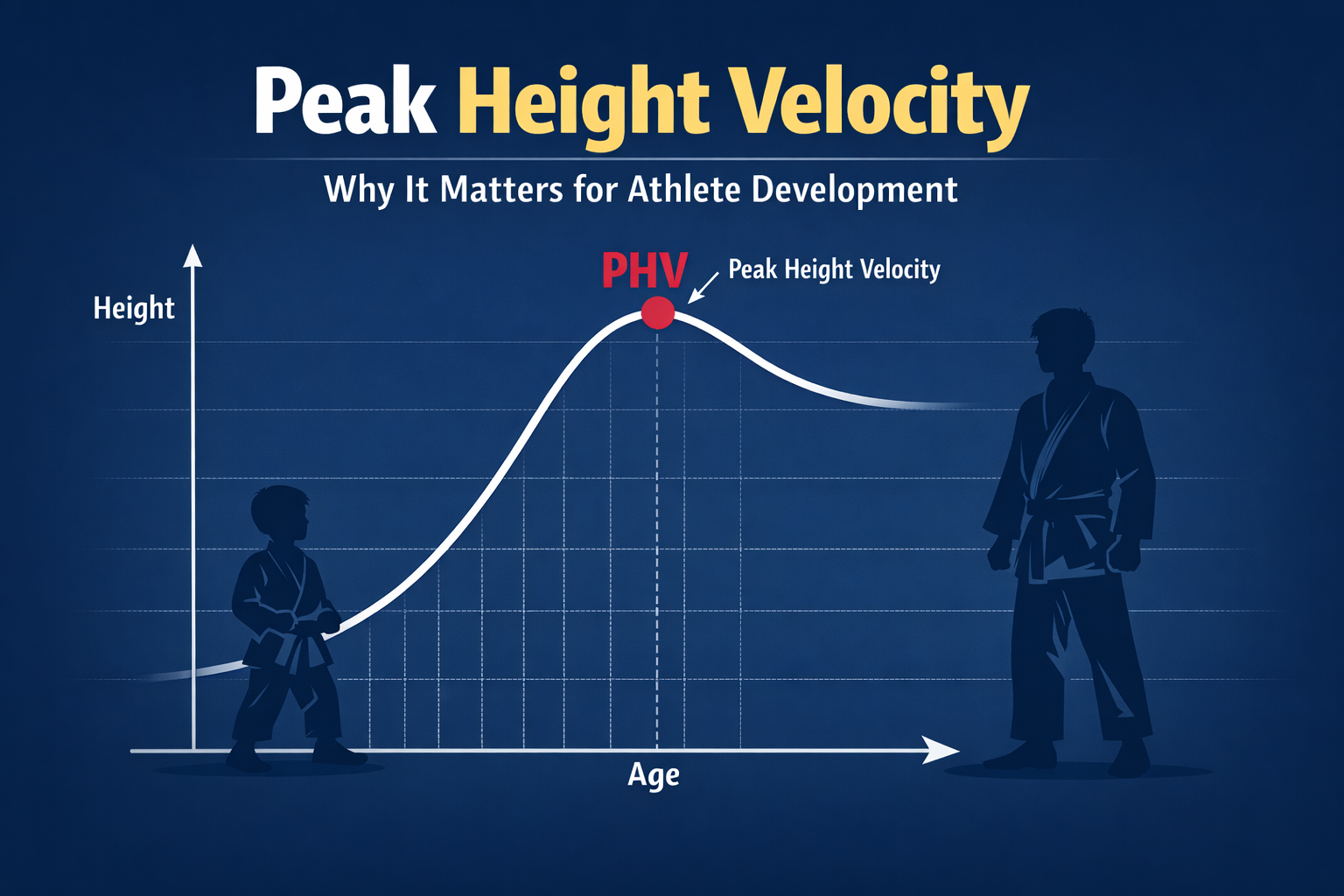
In youth sports, physical growth does not happen at a constant rate.
During adolescence, young athletes experience a period where their height increases rapidly over a relatively short time.
This stage is known as Peak Height Velocity (PHV).
Understanding Peak Height Velocity is important for coaches working with developing athletes. Rapid growth affects coordination, movement control, and injury risk. If coaches understand when this phase occurs and how it influences athletic performance, they can better structure training programs to support long-term development.
What Is Peak Height Velocity?
Peak Height Velocity refers to the period during adolescence when an individual experiences their fastest rate of height growth.
It is considered a key marker of biological maturation.
During PHV, young athletes may grow several centimeters within a single year. Because this growth occurs quickly, the body must adapt to new limb lengths and changing body proportions.
These rapid changes can temporarily influence movement coordination, balance, and physical performance.
Figure: Peak Height Velocity Timeline in Youth Sports
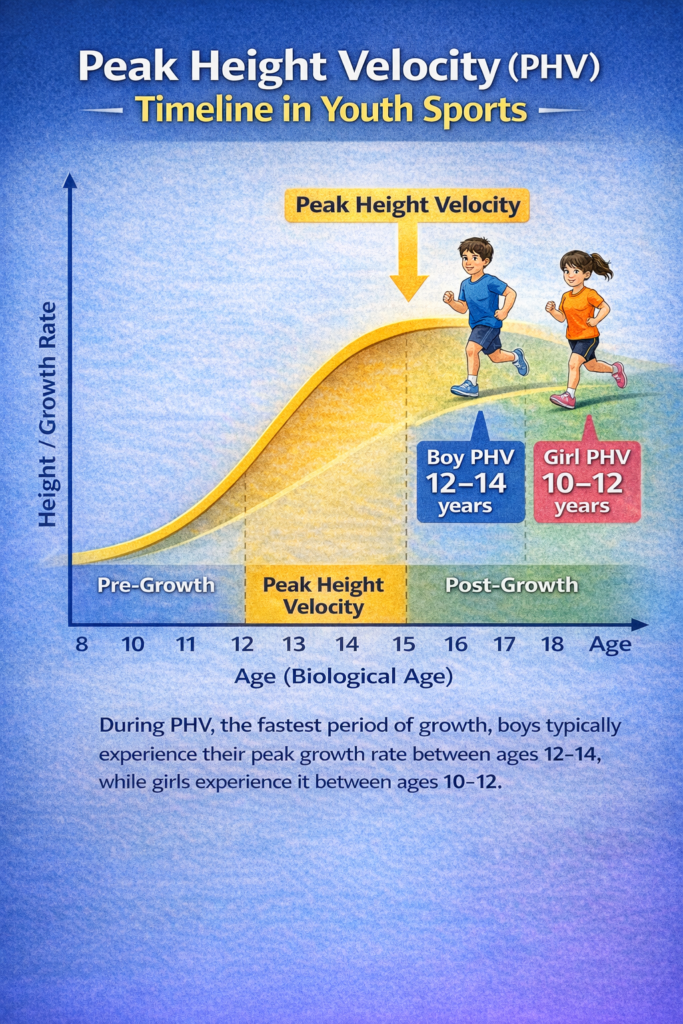
Peak height velocity is the period of fastest growth during adolescence. Girls typically reach PHV around ages 10–12, while boys reach it around ages 12–14.
When Does Peak Height Velocity Occur?
The timing of PHV varies between individuals, but general age ranges are commonly observed.
Typical ranges include:
- Girls: around 11–13 years old
- Boys: around 13–15 years old
However, biological maturation differs from chronological age. Two athletes of the same age may be at completely different stages of physical development.
Because of this, coaches should consider biological growth patterns rather than relying solely on age when planning training programs.
Why Peak Height Velocity Matters in Youth Sports
Peak Height Velocity is a critical stage in athletic development because the body undergoes rapid structural changes.
These changes influence several factors that are important for sport performance.
Changes in Body Proportions
During PHV, limbs often grow faster than the torso.
This alters:
- leverage
- balance
- movement mechanics
Athletes must adapt their motor patterns to these new proportions.
Temporary Changes in Coordination
Because the nervous system must adapt to new body dimensions, athletes may temporarily experience reduced coordination.
Coaches may notice:
- awkward movement patterns
- slower timing
- decreased balance
- inconsistent technique execution
This stage is sometimes referred to in sports science as adolescent awkwardness.
Increased Injury Risk
Rapid growth can also increase stress on joints and connective tissues.
Common areas affected during this stage include:
- knees
- ankles
- hips
Conditions such as Osgood-Schlatter disease are frequently associated with rapid growth during adolescence.
Understanding PHV allows coaches to monitor athlete health and adjust training loads when necessary.
Monitoring Growth and Maturation
Because Peak Height Velocity occurs at different times for each athlete, monitoring growth can be useful for youth coaches.
Some coaches track athlete height periodically to identify periods of rapid growth.
Signs that an athlete may be approaching or experiencing PHV include:
- rapid increases in height
- increased muscle tightness
- temporary coordination changes
- increased fatigue during training
Recognizing these signs allows coaches to adapt training appropriately.
Training Considerations Around Peak Height Velocity
Training should not stop during PHV. However, certain adjustments can help athletes navigate this phase safely.
Emphasize Movement Quality
During rapid growth, athletes benefit from exercises that improve movement control and coordination.
Examples include:
- balance drills
- coordination exercises
- controlled technical training
These activities help the nervous system adapt to changing body proportions.
Manage Training Load
High volumes of intense training may increase injury risk during PHV.
Coaches may consider adjusting:
- training intensity
- volume of high-impact drills
- recovery periods
Managing workload helps reduce stress on developing joints.
Maintain Technical Skill Development
Even if performance temporarily fluctuates, technical training should continue.
Repeating fundamental skills allows athletes to rebuild movement patterns that match their new body structure.
Consistent technical practice also helps maintain confidence during periods of physical change.
The Role of PHV in Long-Term Athlete Development
Peak Height Velocity plays an important role in the Long-Term Athlete Development (LTAD) model.
Understanding biological maturation helps coaches design training programs that match an athlete’s developmental stage.
By aligning training with growth patterns, coaches can:
- support healthy development
- reduce injury risk
- improve long-term athletic potential
Athletes who receive appropriate training during adolescence often develop stronger movement foundations that support future performance.
Conclusion
Peak Height Velocity is one of the most important stages in youth athletic development.
During this phase, rapid physical growth affects coordination, movement patterns, and injury risk. For coaches, understanding PHV provides valuable insight into how athletes develop during adolescence.
Rather than focusing solely on short-term performance, coaches who recognize the influence of biological maturation can structure training programs that support long-term progress.
When managed correctly, the period around Peak Height Velocity becomes an opportunity to build strong foundations for future athletic performance.
If you are looking for kids judo classes on the Gold Coast,
Hirose Judo Academy offers structured training focused on
long-term athlete development.
Learn more about our Kids Judo Classes on the Gold Coast.