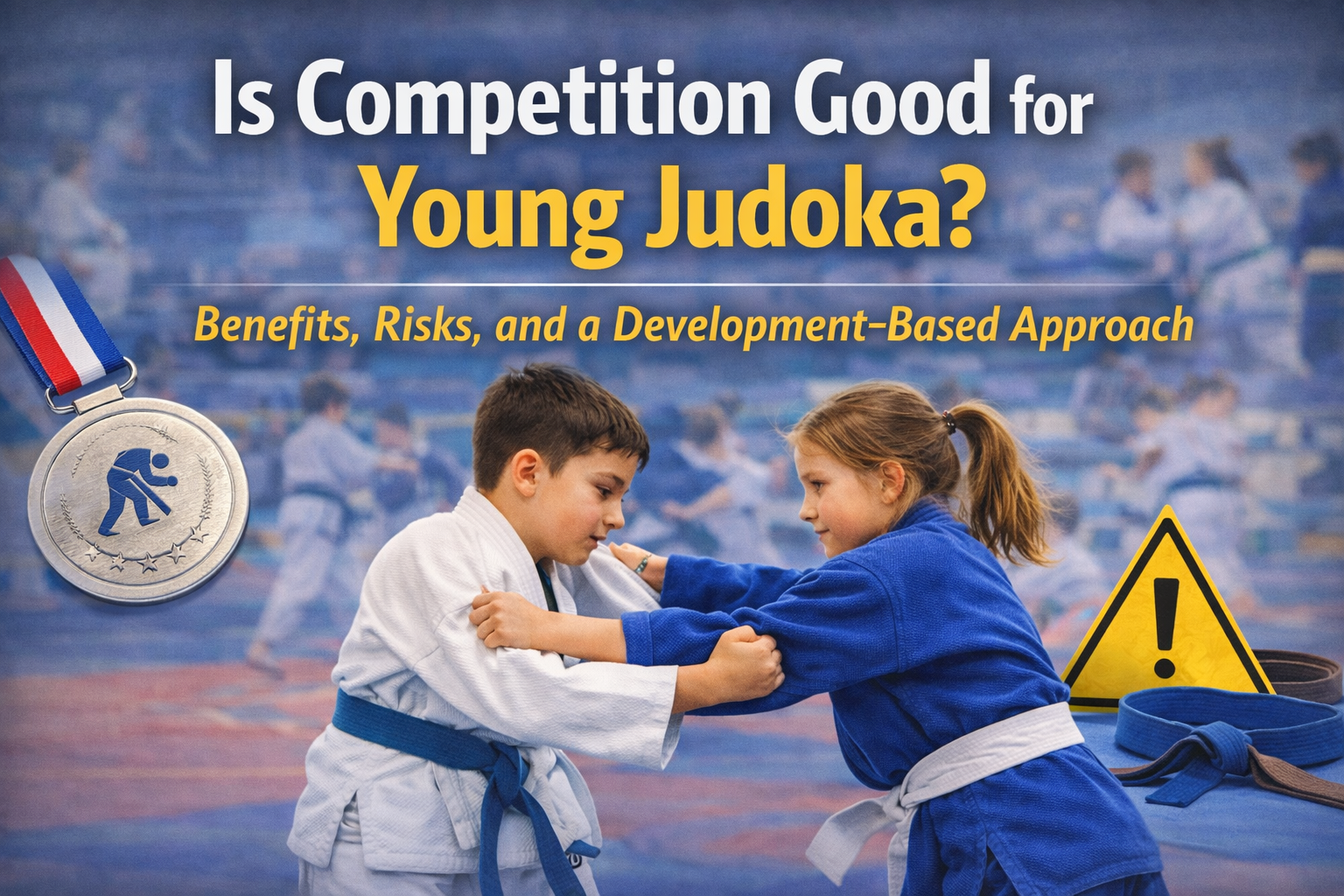
Competition is a central part of judo.
From local tournaments to international championships, competition helps athletes test their skills and measure their progress.
But when it comes to young judoka, many parents and coaches ask an important question:
Is competition actually good for children practicing judo?
Some people believe competition builds confidence and motivation. Others worry that early competition may create pressure or slow long-term development.
The truth lies somewhere in between.
Competition can be extremely valuable for young judoka—but only when it is introduced at the right time and used in the right way.
In this article, we will explore:
- The benefits of competition for young judoka
- Potential risks of competing too early or too often
- How competition should fit into long-term athlete development
- What coaches and parents can do to support healthy competition experiences
Understanding these factors helps ensure that competition supports learning, confidence, and long-term development.
Why Parents and Coaches Ask This Question
Many parents feel unsure about competition in youth sports.
They may worry about:
- pressure to win
- fear of losing
- injuries
- burnout at a young age
These concerns are understandable.
In many sports today, children are pushed into competition very early. When results become the main focus, the learning process can sometimes be forgotten.
Judo, however, has traditionally been viewed as more than just a competitive sport. It is also a method of education and personal development.
Competition in judo should therefore be viewed not simply as a way to win medals, but as a learning experience that helps young athletes grow.
The Benefits of Competition for Young Judoka
When introduced appropriately, competition can provide several important benefits for young athletes.
Confidence and Self-Belief
Competition gives children the opportunity to test their skills in a real situation.
Successfully applying techniques in a match can help young judoka build confidence in their abilities.
Even when they lose, the experience can still strengthen resilience and self-belief.
Learning to Handle Pressure
Matches are different from training.
In competition, athletes must deal with:
- nervousness
- time pressure
- unfamiliar opponents
- the presence of spectators
Learning how to stay calm and focused in these situations is an important life skill.
Tactical Development
Competition exposes athletes to a variety of opponents and styles.
Through competition, young judoka learn:
- how to adapt their techniques
- how to solve problems during a match
- how to make quick tactical decisions
These experiences can accelerate tactical awareness.
Motivation to Improve
For many children, competition creates a clear goal.
Having an upcoming tournament often motivates athletes to train harder and focus more during practice.
When used correctly, competition can therefore increase motivation and engagement in training.
The Risks of Competition in Youth Judo
Although competition has many benefits, it can also create problems if introduced in the wrong way.
Too Much Focus on Winning
One of the most common issues in youth sport is an excessive focus on results.
When children feel that winning is the only goal, they may begin to:
- avoid trying new techniques
- rely on strength instead of skill
- become overly cautious in matches
This can slow technical development.
Reduced Learning in Training
If athletes compete too frequently, they may spend less time developing skills in training.
Technical progress in judo requires:
- repetition
- experimentation
- patient learning
Too many competitions can interrupt this process.
Burnout and Pressure
Young athletes sometimes experience pressure from parents, coaches, or even themselves.
When competition becomes stressful rather than enjoyable, children may lose motivation or even leave the sport.
Maintaining a positive and supportive environment is essential.
When Competition Helps Development
Competition tends to support development when several conditions are present.
A Strong Training Foundation
Athletes should first develop basic skills such as:
- safe ukemi (breakfalls)
- fundamental throwing techniques
- basic gripping and movement
Without these foundations, competition may create bad habits.
A Learning-Focused Environment
The most effective youth programs treat competition as part of the learning process, not the ultimate goal.
After tournaments, coaches often review matches and discuss:
- what worked well
- what can be improved
- what new skills should be developed
This reflection helps athletes grow from each experience.
Balanced Competition Schedules
Competition should be balanced with training.
Young judoka need sufficient time to:
- practice techniques
- improve physical coordination
- develop confidence in training
Competition should complement training, not replace it.
When Competition May Hurt Development
Competition may become harmful when it is introduced in an unhealthy way.
Common warning signs include:
Excessive Tournament Participation
Competing every few weeks can reduce time for skill development and recovery.
Young athletes need a balanced schedule that includes both training and rest.
Adult Expectations
Sometimes adults place unrealistic expectations on young athletes.
Children may feel pressure to win for their coach, parents, or team.
Healthy youth programs focus on effort and improvement rather than results.
Fear of Failure
If athletes become afraid of losing, they may avoid taking risks or trying new techniques.
In judo, learning often happens through mistakes.
A supportive environment encourages athletes to view losses as learning opportunities.
How Competition Fits into Long-Term Athlete Development
In modern coaching philosophy, competition is viewed as one component of long-term athlete development.
The development process typically follows a progression like this:
Training and movement development
↓
Technical skill acquisition
↓
Controlled randori practice
↓
Competition experience
↓
Athlete development
In this model, competition is not the starting point—it is the testing ground for skills developed in training.
Athletes who build strong foundations early often achieve greater success later in their careers.
What Good Youth Judo Programs Do Differently
High-quality youth judo programs tend to share several characteristics.
Development Comes First
These programs prioritize:
- technical skill development
- safe training practices
- long-term progress
Short-term results are less important.
Competition Is Introduced Gradually
Young athletes may first participate in:
- friendly matches
- club events
- local tournaments
As they gain confidence and experience, they gradually enter more structured competitions.
Coaches Emphasize Learning
Instead of focusing only on results, coaches encourage athletes to reflect on their performances.
Questions such as:
- What did you learn from this match?
- What technique worked best?
- What should we practice next?
help athletes improve continuously.
Advice for Parents of Young Judoka
Parents play an important role in shaping a child’s competition experience.
Here are a few helpful guidelines.
Focus on Effort, Not Results
Praise effort, courage, and improvement rather than only victories.
Children should feel proud of their effort regardless of the outcome.
Support Emotional Development
Competition can bring strong emotions.
Parents can help children process these feelings and learn from each experience.
Keep the Sport Enjoyable
Enjoyment is one of the strongest predictors of long-term participation in sport.
When children enjoy judo, they are more likely to continue training and improving.
Conclusion
So, is competition good for young judoka?
The answer is yes—but only when used in the right way.
Competition can help children develop:
- confidence
- resilience
- tactical understanding
- motivation to improve
However, competition should never replace the fundamental goal of youth judo: long-term development.
The most successful young athletes typically come from programs that prioritize learning, skill development, and enjoyment.
When competition is introduced thoughtfully and balanced with quality training, it becomes a powerful tool for helping young judoka grow—both as athletes and as individuals.
If you are looking for kids judo classes on the Gold Coast,
Hirose Judo Academy offers structured training focused on
long-term athlete development.
Learn more about our Kids Judo Classes on the Gold Coast.